
AI Data Center Liquid Cooling: CDU & Cold Plate Guide

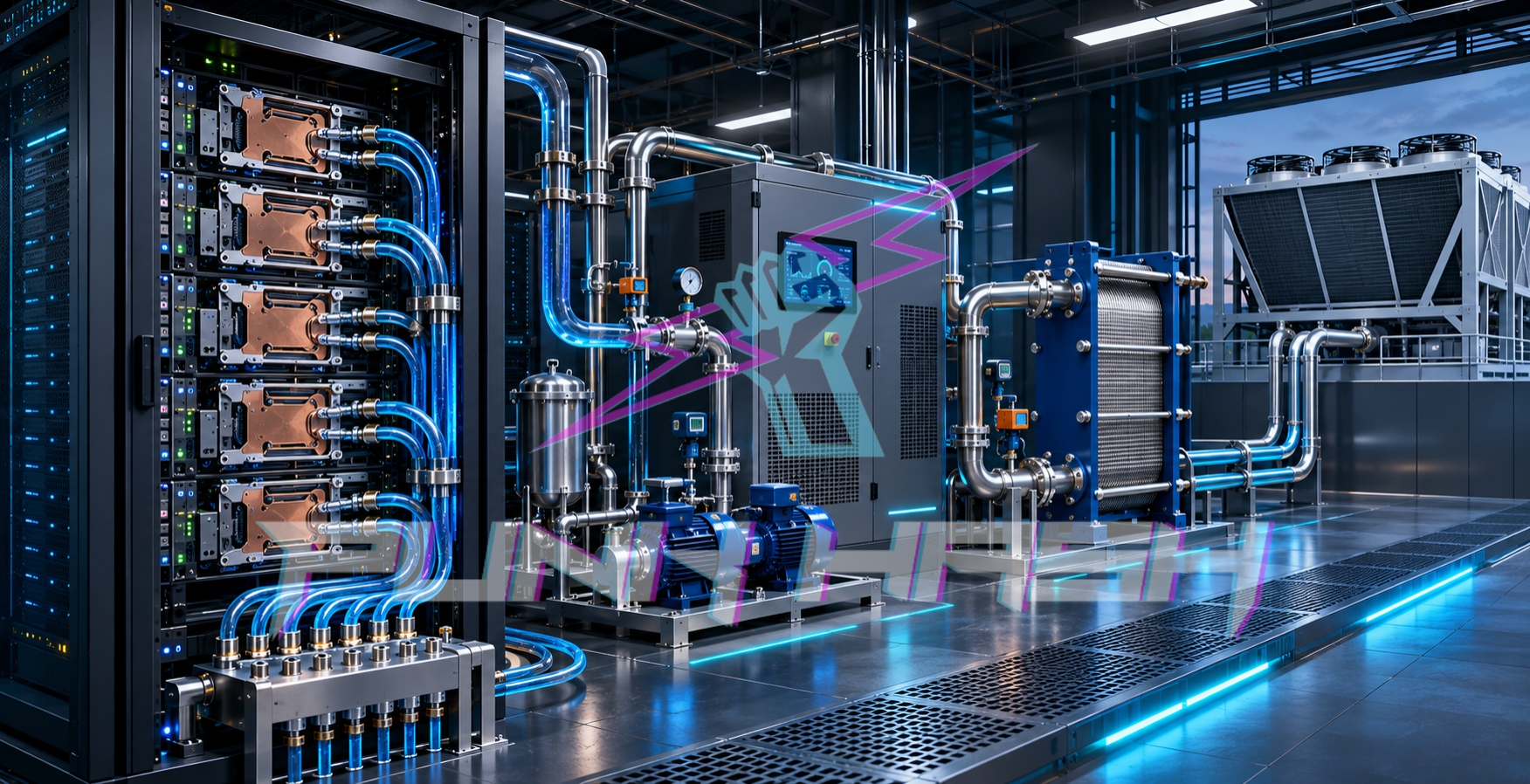
AI Data Center Liquid Cooling: A Practical Hardware Buying Guide
November 23, 2026 | PunkHash Infrastructure Insights
Introduction: Why AI Liquid Cooling Is More Than a Cold Plate
As AI computing systems become more powerful, thermal management is becoming a critical part of data center infrastructure planning.
High-density GPU servers can place substantial demands on traditional air-cooling systems.
For certain deployments, direct-to-chip liquid cooling offers a way to transfer heat from processors into a controlled liquid circuit.
However, building a reliable liquid-cooling system requires more than purchasing GPU cold plates.
A complete solution may involve coolant distribution units (CDUs), pumps, heat exchangers, manifolds, hoses, connectors, sensors, and external heat-rejection equipment.
Each component must be selected according to the actual computing hardware, operating conditions, and facility requirements.
For AI hardware manufacturers, system integrators, and OEM buyers, the real challenge is selecting components that work together safely and reliably.
This guide explains the essential components, engineering considerations, and procurement requirements for AI data center liquid-cooling projects.
1. Understanding the Complete Liquid-Cooling System
A typical direct-to-chip cooling architecture contains several connected stages.
Stage 1 — Heat Collection
Cold plates transfer heat from GPUs, CPUs, or other high-power components into the coolant.
Stage 2 — Coolant Circulation
Pumps move coolant through the server-side circuit, manifolds, and associated piping.
Stage 3 — Heat Transfer
A CDU or other suitable heat-transfer arrangement connects the technology cooling system with the facility cooling system.
Stage 4 — Heat Rejection
Heat is transferred to facility equipment, which may include dry coolers, chillers, or other heat-rejection systems.
Stage 5 — Monitoring and Protection
Sensors, controls, filtration, leak detection, and safety systems help maintain operating conditions.
The complete design depends on the server platform and facility architecture.
Not every project requires the same equipment arrangement.
2. GPU Cold Plates: Compatibility Comes First
A GPU cold plate transfers heat from a processor package into a liquid-cooling circuit.
Its performance depends on mechanical fit, thermal interface quality, coolant flow, material compatibility, and operating conditions.
Before selecting a cold plate, buyers should confirm:
- Exact GPU or CPU model
- Board and server configuration
- Mechanical mounting requirements
- Heat load and thermal performance targets
- Coolant composition
- Flow-rate requirements
- Pressure-drop limits
- Inlet temperature requirements
- Material and seal compatibility
- Service and maintenance conditions
A cold plate designed for one GPU generation should not automatically be considered compatible with another.
Even products using similar processor names can have different mechanical designs or integration requirements.
Custom Cold Plates for OEM Projects
Some AI hardware manufacturers require custom cold plates for proprietary boards or compact computing systems.
These projects may involve:
- Mechanical drawing review
- Thermal design assessment
- Material selection
- Prototype development
- Pressure and leak testing
- Production feasibility evaluation
For a custom cold plate inquiry, engineering drawings and thermal requirements are more useful than a processor name alone.
3. What Does a Coolant Distribution Unit Do?
A coolant distribution unit, commonly called a CDU, manages coolant circulation and thermal transfer within a liquid-cooling installation.
Depending on its design, a CDU may provide:
- Pumping and flow control
- Heat exchange
- Temperature regulation
- Pressure monitoring
- Filtration
- Leak detection integration
- System monitoring
- Redundancy options
A CDU is not simply a pump connected to a heat exchanger.
Its suitability depends on the complete cooling architecture.
How to Select a CDU
Important engineering questions include:
Cooling capacity: What is the actual heat load, including expected expansion?
Coolant temperature: What supply and return temperatures are required?
Flow rate: How much coolant must circulate through the connected equipment?
Pressure: What are the operating pressure and allowable pressure-drop limits?
Redundancy: Does the application require redundant pumps, power supplies, or control systems?
Monitoring: Which alarms, sensors, and communication interfaces are required?
Maintenance: How will filters, pumps, and other components be serviced?
A CDU should be selected using verified system requirements rather than its nominal cooling capacity alone.
4. Heat Exchangers: Connecting the Cooling Circuits
Heat exchangers transfer thermal energy between different fluid circuits.
Plate heat exchangers are commonly considered in industrial and data center liquid-cooling applications.
They may allow the technology cooling loop and facility cooling loop to remain hydraulically separated.
This separation can support different operating pressures, coolant specifications, and maintenance arrangements.
However, heat exchanger performance depends on several factors:
- Required heat-transfer capacity
- Supply and return temperatures
- Approach temperature
- Coolant properties
- Flow rates
- Allowable pressure drop
- Materials and corrosion resistance
- Water quality and fouling
- Cleaning and maintenance requirements
Why Material Selection Matters
The correct material depends on the actual coolant chemistry and operating environment.
Stainless steel and other materials may be suitable for particular applications, but compatibility must be verified.
Selecting a heat exchanger based only on its advertised capacity can lead to inadequate performance or maintenance problems.
5. Dry Coolers and External Heat Rejection
After heat is removed from the processors, it must ultimately be rejected from the facility.
Depending on climate and system design, external heat-rejection equipment may include:
- Dry coolers
- Chillers
- Hybrid cooling systems
- Other engineered facility cooling arrangements
Dry coolers transfer heat from a fluid circuit to ambient air.
Their effectiveness depends on outdoor conditions, fluid temperatures, airflow, equipment sizing, and control strategy.
Why Location Matters
A cooling solution suitable for a temperate climate may not perform the same way in a hot environment.
Before selecting a dry cooler, buyers should provide:
- Installation location
- Design ambient temperature
- Required cooling capacity
- Coolant type
- Supply and return temperatures
- Flow requirements
- Noise restrictions
- Available installation space
- Electrical requirements
For international projects, environmental conditions should be evaluated before equipment selection.
6. Manifolds, Hoses, Connectors and Sensors
Smaller components can have a major impact on cooling-system reliability.
A complete liquid-cooling installation may require:
- Distribution manifolds
- Flexible hoses
- Quick-disconnect fittings
- Valves
- Pressure sensors
- Temperature sensors
- Flow sensors
- Leak detection equipment
- Conjuntos de cabos
- Monitoring interfaces
These components must be compatible with the system’s fluid, pressure, temperature, and maintenance requirements.
Avoid Common Integration Mistakes
Buyers should not assume that two connectors are interchangeable because they look similar.
Mechanical fit, seal design, pressure rating, flow characteristics, material compatibility, and installation requirements all matter.
For custom assemblies, technical drawings and verified specifications are essential.
7. Can Bitcoin Mining Cooling Equipment Be Used for AI Servers?
Bitcoin mining and AI computing share certain thermal engineering principles.
Both may require pumps, heat exchangers, external coolers, manifolds, and monitoring systems.
However, their operating requirements can differ significantly.
ASIC mining equipment and GPU servers may use different:
- Coolant specifications
- Operating temperatures
- Flow rates
- Pressure limits
- Connector systems
- Reliability requirements
- Redundancy architectures
- Maintenance procedures
Some supporting infrastructure components may be reusable after engineering evaluation.
But a cooling system designed for ASIC miners should never be assumed to be directly compatible with GPU servers.
A proper feasibility assessment is required before reusing equipment.
8. How to Prepare an AI Liquid-Cooling RFQ
For equipment buyers, a detailed request for quotation can reduce unnecessary communication and help suppliers assess feasibility.
A useful RFQ should include the following information.
Project Information
- Company and project location
- Application: AI training, inference, HPC, or another workload
- Project stage: concept, prototype, pilot, or deployment
- Expected equipment quantity
- Target delivery schedule
Computing Hardware
- Server manufacturer and model
- GPU and CPU specifications
- Number of servers or racks
- Estimated IT load
- Manufacturer cooling requirements
Cooling Specifications
- Required cooling capacity
- Coolant composition
- Supply and return temperatures
- Required flow rate
- Operating pressure
- Allowable pressure drop
- Redundancy requirements
- Monitoring and control interfaces
Mechanical and Commercial Requirements
- Drawings and dimensions
- Connector specifications
- Ambiente de instalação
- Required certifications
- Testing and inspection requirements
- Prototype quantity
- Estimated production volume
- País de destino
Suppliers may need additional information depending on the system design.
9. What OEM/ODM Buyers Should Evaluate
For AI hardware companies developing custom cooling products, supplier selection should go beyond unit price.
Important considerations include:
Engineering communication
Can the supplier review drawings, specifications, and integration constraints?
Prototype capability
Can the proposed design be evaluated before committing to production?
Testing
What pressure, leakage, thermal, material, and quality checks are required?
Consistência na produção
Can the supplier document revisions, component specifications, and inspection requirements?
Cadeia de abastecimento
Are critical components available for the expected project lifecycle?
Commercial clarity
Are tooling, samples, production quantities, delivery terms, and responsibilities clearly defined?
A well-structured OEM/ODM process helps reduce integration risks and unexpected costs.
10. How PunkHash Approaches Cooling Infrastructure
PunkHash’s existing business includes ASIC mining hardware, hydro-cooling infrastructure, equipment sourcing, and supporting components.
These areas provide relevant supply-chain experience in pumps, heat exchangers, dry coolers, connectors, and customized hardware.
As AI infrastructure demand develops, we are exploring related opportunities in liquid-cooling components and OEM/ODM hardware projects.
Our approach is to evaluate each inquiry against the actual technical requirements.
Depending on the project, this may involve reviewing:
- Cold plate specifications
- Heat exchanger requirements
- External cooling equipment
- Custom piping and connectors
- Electrical accessories
- Mechanical components
- Prototype and manufacturing requirements
Specific product compatibility, certification, production capability, pricing, and delivery commitments must be confirmed for each project.
We do not assume that mining equipment is automatically suitable for AI servers.
Perguntas Frequentes
What is the difference between a CDU and a dry cooler?
A CDU manages coolant circulation and heat transfer within a liquid-cooling architecture. A dry cooler rejects heat from a fluid circuit to ambient air. Their functions are different, although they may be used together in an engineered system.
Can any GPU use direct-to-chip liquid cooling?
No. Compatibility depends on the GPU, board design, server configuration, cold plate, and manufacturer requirements.
What information is needed to quote a GPU cold plate?
The exact hardware model, mechanical drawings, thermal load, coolant specification, flow rate, pressure requirements, quantity, and timeline are useful starting points.
Are mining hydro-cooling components compatible with AI servers?
Not automatically. Some components may be technically reusable, but compatibility must be assessed for the specific application.
Is liquid cooling always better than air cooling?
No. The appropriate approach depends on power density, hardware requirements, operating environment, maintenance capabilities, and project economics.
Can an OEM develop a custom liquid-cooling assembly?
Potentially, yes. Feasibility depends on the technical design, validation requirements, supplier capability, and production volume.
Conclusion: Reliable AI Cooling Starts With System-Level Engineering
Liquid cooling is becoming an important consideration for high-density AI computing infrastructure.
But a reliable system requires more than a high-performance cold plate.
Cold plates, CDUs, heat exchangers, dry coolers, piping, sensors, and monitoring equipment must operate together within the required engineering limits.
For AI hardware manufacturers, data center integrators, and OEM buyers, selecting the right components starts with clear technical specifications.
Reliable Cooling = Compatible Components + Correct Engineering + Testing + Long-Term Support
Planning a Liquid-Cooling Hardware Project?
PunkHash welcomes inquiries from AI hardware companies, system integrators, and OEM/ODM partners.
Share your equipment model, technical specifications, drawings where available, target quantity, project location, and expected delivery schedule.
We can review the requirements and explore suitable sourcing or customization options.
Sítio Web: https://www.punkhash.com/
WhatsApp: https://wa.me/85293158482
PunkHash — Compute the Future Together.
Related Reading
AI Data Center Infrastructure: 7 Essential Hardware Systems
https://www.punkhash.com/ai-data-center-infrastructure-hardware-guide/
Technical Reference
ASHRAE — Liquid Cooling Guidelines for Datacom Equipment Centers.
Open Compute Project — Advanced Cooling Solutions technical resources.