
Bitcoin Mining to AI Data Centers: 7 Key Challenges

November 20, 2026 | PunkHash Industry Insights
Why Bitcoin Mining Companies Are Exploring AI Infrastructure
The rapid expansion of artificial intelligence is creating new demand for electricity, data center capacity, cooling systems, and computing infrastructure.
For Bitcoin mining companies, this represents both an opportunity and a challenge.
Many large mining operators already control valuable assets, including power agreements, substations, industrial land, and facilities designed for high-density electrical loads.
These assets may provide a starting point for AI infrastructure development.
However, converting a Bitcoin mining facility into an AI data center is far more complex than replacing ASIC miners with GPU servers.
The central challenge is transforming an energy-intensive mining facility into a reliable, high-performance computing environment.
This article examines seven infrastructure challenges that mining operators, data center developers, and equipment suppliers should consider.
1. Power Capacity Is Not the Same as Power Reliability
Bitcoin mining and AI data centers both consume significant electricity.
However, their operating requirements can differ substantially.
Bitcoin mining facilities may be designed to adjust or interrupt their electrical loads in response to electricity prices, grid conditions, or contractual requirements.
AI data centers, particularly those serving enterprise and cloud customers, may require much higher levels of continuous power availability.
Depending on the project, this can involve:
- Redundant power distribution
- UPS systems
- Backup generation
- Power quality monitoring
- Electrical protection
- Higher reliability standards
- More sophisticated facility management
A mining site with a large power allocation is not automatically ready to support enterprise AI workloads.
Key question: Can the existing electrical infrastructure meet the availability and redundancy requirements of the intended AI customers?
2. ASIC Mining and GPU Computing Require Different Cooling Strategies
Cooling is one of the most important engineering considerations when evaluating a potential conversion.
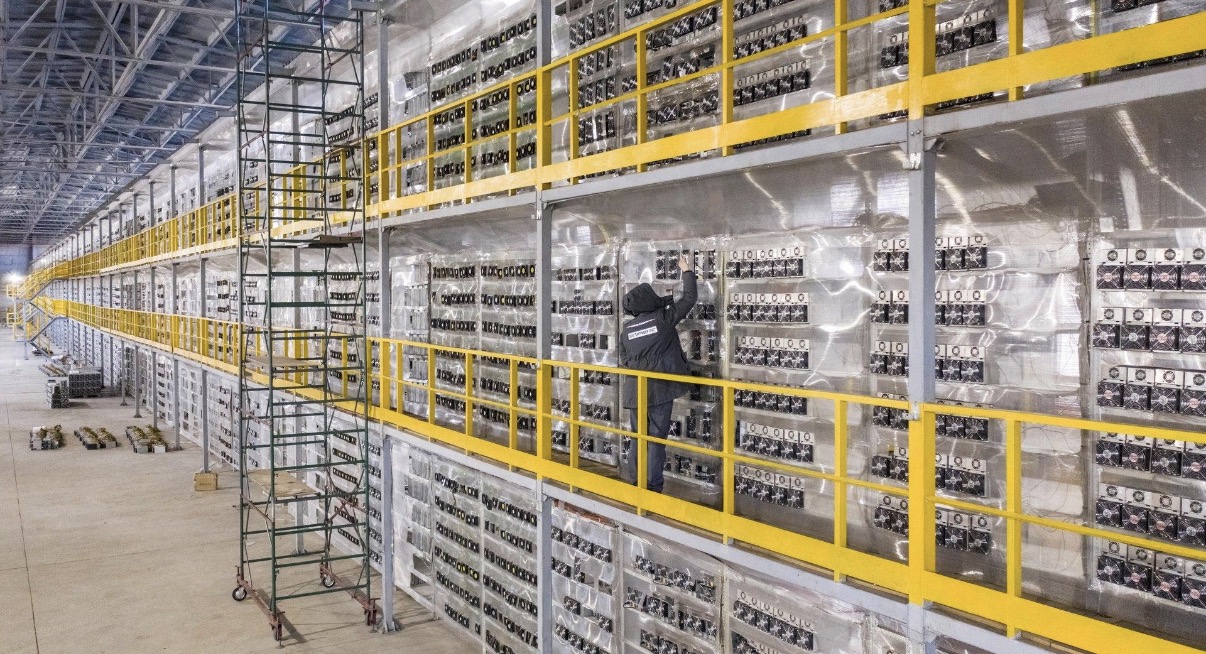
ASIC mining facilities are commonly designed around specialized mining equipment.
Depending on the miner models, they may use high-volume air cooling, hydro cooling, or immersion cooling.
AI data centers may operate GPU servers with significantly different heat densities, airflow requirements, and liquid-cooling specifications.
A cooling system suitable for ASIC miners should not be assumed to be compatible with AI servers.
Refrigeración por aire
Air cooling remains relevant for many computing applications.
However, high-density deployments can create challenges involving airflow distribution, heat removal, fan power, and facility layout.
Refrigeración líquida
Liquid cooling can be appropriate for certain high-density computing environments.
Depending on the equipment and facility, the system may include:
- Platos fríos
- Unidades de distribución de refrigerante (CDU)
- Heat exchangers
- Pumps and control systems
- Manifolds and piping
- Dry coolers
- Monitoring and safety components
The actual design depends on server specifications, coolant requirements, temperature targets, redundancy, and site conditions.
Why Thermal Engineering Matters
Cooling performance is not determined by a single component.
A successful system must consider the entire heat-removal path, from the computing device to the final heat-rejection equipment.
For both mining and AI infrastructure, thermal management must be engineered around the actual workload.
3. AI Data Centers Need More Advanced Networking
Bitcoin mining generally involves transmitting relatively small amounts of mining-related data.
Many AI applications have substantially different networking requirements.
Large-scale AI training and distributed computing can involve intensive communication between accelerators, servers, and storage systems.
Depending on the workload, this may require:
- High-bandwidth networking
- Low-latency connections
- Advanced switching infrastructure
- High-speed optical or copper interconnects
- Dedicated storage networking
- Network redundancy
- Sophisticated monitoring and management
Existing mining network infrastructure may require extensive upgrades.
Key question: Does the facility’s networking architecture support the AI workloads that customers intend to deploy?
4. Facility Layout and Physical Infrastructure May Need Redesign
A mining facility and an AI data center can have very different physical layouts.
ASIC mining operations may prioritize maximum equipment density, efficient airflow, and straightforward maintenance access.
AI facilities may require different rack arrangements, cable routing, cooling distribution, fire protection, security, and service access.
Potential modifications include:
- Rack and floor-loading assessments
- Electrical distribution upgrades
- Liquid-cooling piping
- Cable management
- Fire detection and protection
- Physical security
- Monitoring systems
- Maintenance access
- Building and environmental controls
These changes can affect construction schedules and project costs.
A conversion project should begin with an engineering assessment rather than assuming that existing mining infrastructure can be reused without modification.
5. Financing Can Be as Challenging as Engineering
The financial requirements of AI data center development can be substantial.
A recent example is Hyperscale Data’s Michigan project.
According to reporting published on November 19, 2026, the company sold approximately $74 million worth of Bitcoin from late July onward while financing its transition toward AI infrastructure.
Despite these sales, the company disclosed that it still needed approximately $74.8 million to complete the project within its planned timeline.
The company has discussed a customer agreement with a potential value of up to $1.2 billion, but that amount depends on contractual extensions and successful performance.
Potential contract value is not the same as realized revenue or available construction financing.
For infrastructure developers and suppliers, this distinction is critical.
Before committing to large equipment orders, project stakeholders should evaluate:
- Confirmed financing
- Customer contractual commitments
- Construction budgets
- Payment milestones
- Equipment procurement schedules
- Engineering acceptance requirements
- Project delays and contingency planning
Long-term business opportunities should be evaluated alongside short-term financial risks.
6. Equipment Reuse and Asset Disposition Require Careful Evaluation
When mining companies transition toward AI infrastructure, their existing equipment does not necessarily become suitable for AI computing.
Bitcoin ASIC miners are specialized devices designed for mining algorithms.
They cannot simply be repurposed as general-purpose GPU training servers.
However, selected supporting assets may have value in other projects.
These could include:
- Electrical distribution equipment
- Transformers and switchgear
- Selected cooling infrastructure
- Industrial buildings and land
- Power agreements, subject to contractual restrictions
- Monitoring and facility systems
Each asset must be evaluated for technical suitability, ownership, condition, and applicable standards.
The transition may also create opportunities in the secondary ASIC equipment market.
Mining operators could choose to sell, relocate, or continue operating their existing ASIC fleets.
For equipment buyers, any potential transaction should be supported by verified inventory, testing documentation, ownership records, and delivery conditions.
7. Engineering Execution Determines Whether the Project Succeeds
Even when a mining company has electricity, land, customers, and financing, it must still deliver a working facility.
The engineering process may involve:
Stage 1 — Feasibility Assessment
Review power availability, site conditions, customer requirements, cooling capacity, and project economics.
Stage 2 — System Architecture
Define electrical distribution, cooling architecture, network infrastructure, physical layout, and reliability requirements.
Stage 3 — Equipment Procurement
Confirm technical specifications, approved suppliers, lead times, quality standards, and commercial terms.
Stage 4 — Installation and Integration
Coordinate construction, electrical work, mechanical systems, networking, monitoring, and equipment installation.
Stage 5 — Testing and Commissioning
Verify that the facility performs under realistic operating conditions.
Stage 6 — Operations and Maintenance
Establish procedures for monitoring, preventive maintenance, spare parts, incident response, and ongoing performance management.
Skipping these stages can increase technical and commercial risks.
What Opportunities Does This Create for Infrastructure Suppliers?
The convergence of Bitcoin mining and AI infrastructure may create opportunities across several hardware categories.
Hardware de minería ASIC
Companies restructuring their operations may continue buying, selling, or relocating mining equipment.
This creates potential demand for equipment sourcing, inspection, replacement parts, and logistics.
Cooling Infrastructure
Mining and AI projects both require effective heat management, although their technical specifications differ.
Potential opportunities include heat exchangers, dry coolers, CDUs, liquid-cooling components, and customized thermal systems.
Electrical and Mechanical Components
Power distribution, industrial connectors, cabling, pumps, manifolds, and monitoring equipment may be relevant to different computing infrastructure projects.
Industrial Edge AI Hardware
Not all AI workloads require hyperscale data centers.
Industrial vision, robotics, automation, and edge inference can require smaller, application-specific computing systems.
These projects may involve computing modules, custom carrier boards, power design, cooling, enclosures, and OEM/ODM manufacturing.
For hardware companies, this creates an opportunity to support different computing environments without assuming that all applications share the same engineering requirements.
How PunkHash Approaches Computing Infrastructure
PunkHash has experience in ASIC mining hardware sourcing, mining components, and customized cooling infrastructure.
Our existing business includes mining equipment, supporting hardware, and thermal management solutions.
As computing requirements evolve, we are also exploring opportunities in industrial Edge AI hardware, customized computing systems, and related OEM/ODM supply chains.
Our approach is based on a practical principle:
Different computing workloads require different hardware and infrastructure designs.
Rather than treating mining and AI as interchangeable technologies, we believe each project should begin with its actual technical and commercial requirements.
Our existing mining hardware and cooling business remains an important part of this direction.
Preguntas frecuentes
Can an existing Bitcoin mining facility be converted into an AI data center?
Potentially, yes. However, feasibility depends on power reliability, cooling capacity, networking, physical infrastructure, financing, and customer requirements.
Can Bitcoin ASIC miners be used for AI training?
No. Bitcoin ASIC miners are specialized for their intended mining computations and are not general-purpose AI training accelerators.
Can hydro cooling systems from mining facilities be reused for GPU servers?
Some infrastructure components may be reusable after engineering evaluation, but compatibility cannot be assumed. AI servers may have different coolant, temperature, pressure, flow, reliability, and control requirements.
Why are Bitcoin miners attractive to AI infrastructure developers?
Some miners already have access to significant electrical capacity, substations, industrial land, and facilities that could reduce certain site-development barriers.
What is the biggest risk when converting a mining facility to AI?
There is no single universal risk. Financing, power reliability, thermal engineering, networking, construction, and customer delivery obligations can all affect project success.
Does every AI project require a large data center?
No. Many industrial AI applications can run on smaller edge computing systems, depending on model requirements, latency, power, connectivity, and deployment conditions.
Conclusion: The Future of Computing Infrastructure Requires More Than Power
Bitcoin mining companies have developed valuable experience in operating energy-intensive computing facilities.
As AI infrastructure demand expands, some of these capabilities and assets may become relevant to new applications.
However, converting a mining operation into an AI data center is not a simple hardware replacement project.
Success depends on the integration of:
Power + Cooling + Networking + Financing + Engineering + Reliable Operations
For mining operators, AI developers, and equipment suppliers, understanding these differences is essential.
At PunkHash, we believe the next generation of computing infrastructure will require flexible hardware sourcing, thoughtful thermal design, and solutions tailored to real applications.
Compute the Future Together.
Discuss Your Computing Infrastructure Requirements
Are you planning an ASIC mining facility, upgrading a cooling system, or evaluating new computing hardware requirements?
Share your project location, power capacity, equipment specifications, and technical requirements with PunkHash.
Página web: https://www.punkhash.com/
References
- CoinDesk, November 19, 2026 — Bitcoin miner that sold its last BTC warns it may run short of cash for $1.2 billion AI deal.
- Cointelegraph, November 11, 2026 — US data center restrictions could give Bitcoin miners an edge in AI, though challenges remain.
- CryptoSlate, November 1, 2026 — AI wants Bitcoin miners’ power, but the contracts reveal who really gets paid.
From Bitcoin Mining to AI Data Centers: 7 Infrastructure Challenges
November 20, 2026 | PunkHash Industry Insights
Why Bitcoin Mining Companies Are Exploring AI Infrastructure
The rapid expansion of artificial intelligence is creating new demand for electricity, data center capacity, cooling systems, and computing infrastructure.
For Bitcoin mining companies, this represents both an opportunity and a challenge.
Many large mining operators already control valuable assets, including power agreements, substations, industrial land, and facilities designed for high-density electrical loads.
These assets may provide a starting point for AI infrastructure development.
However, converting a Bitcoin mining facility into an AI data center is far more complex than replacing ASIC miners with GPU servers.
The central challenge is transforming an energy-intensive mining facility into a reliable, high-performance computing environment.
This article examines seven infrastructure challenges that mining operators, data center developers, and equipment suppliers should consider.
1. Power Capacity Is Not the Same as Power Reliability
Bitcoin mining and AI data centers both consume significant electricity.
However, their operating requirements can differ substantially.
Bitcoin mining facilities may be designed to adjust or interrupt their electrical loads in response to electricity prices, grid conditions, or contractual requirements.
AI data centers, particularly those serving enterprise and cloud customers, may require much higher levels of continuous power availability.
Depending on the project, this can involve:
- Redundant power distribution
- UPS systems
- Backup generation
- Power quality monitoring
- Electrical protection
- Higher reliability standards
- More sophisticated facility management
A mining site with a large power allocation is not automatically ready to support enterprise AI workloads.
Key question: Can the existing electrical infrastructure meet the availability and redundancy requirements of the intended AI customers?
2. ASIC Mining and GPU Computing Require Different Cooling Strategies
Cooling is one of the most important engineering considerations when evaluating a potential conversion.
ASIC mining facilities are commonly designed around specialized mining equipment.
Depending on the miner models, they may use high-volume air cooling, hydro cooling, or immersion cooling.
AI data centers may operate GPU servers with significantly different heat densities, airflow requirements, and liquid-cooling specifications.
A cooling system suitable for ASIC miners should not be assumed to be compatible with AI servers.
Refrigeración por aire
Air cooling remains relevant for many computing applications.
However, high-density deployments can create challenges involving airflow distribution, heat removal, fan power, and facility layout.
Refrigeración líquida
Liquid cooling can be appropriate for certain high-density computing environments.
Depending on the equipment and facility, the system may include:
- Platos fríos
- Unidades de distribución de refrigerante (CDU)
- Heat exchangers
- Pumps and control systems
- Manifolds and piping
- Dry coolers
- Monitoring and safety components
The actual design depends on server specifications, coolant requirements, temperature targets, redundancy, and site conditions.
Why Thermal Engineering Matters
Cooling performance is not determined by a single component.
A successful system must consider the entire heat-removal path, from the computing device to the final heat-rejection equipment.
For both mining and AI infrastructure, thermal management must be engineered around the actual workload.
3. AI Data Centers Need More Advanced Networking
Bitcoin mining generally involves transmitting relatively small amounts of mining-related data.
Many AI applications have substantially different networking requirements.
Large-scale AI training and distributed computing can involve intensive communication between accelerators, servers, and storage systems.
Depending on the workload, this may require:
- High-bandwidth networking
- Low-latency connections
- Advanced switching infrastructure
- High-speed optical or copper interconnects
- Dedicated storage networking
- Network redundancy
- Sophisticated monitoring and management
Existing mining network infrastructure may require extensive upgrades.
Key question: Does the facility’s networking architecture support the AI workloads that customers intend to deploy?
4. Facility Layout and Physical Infrastructure May Need Redesign
A mining facility and an AI data center can have very different physical layouts.
ASIC mining operations may prioritize maximum equipment density, efficient airflow, and straightforward maintenance access.
AI facilities may require different rack arrangements, cable routing, cooling distribution, fire protection, security, and service access.
Potential modifications include:
- Rack and floor-loading assessments
- Electrical distribution upgrades
- Liquid-cooling piping
- Cable management
- Fire detection and protection
- Physical security
- Monitoring systems
- Maintenance access
- Building and environmental controls
These changes can affect construction schedules and project costs.
A conversion project should begin with an engineering assessment rather than assuming that existing mining infrastructure can be reused without modification.
5. Financing Can Be as Challenging as Engineering
The financial requirements of AI data center development can be substantial.
A recent example is Hyperscale Data’s Michigan project.
According to reporting published on November 19, 2026, the company sold approximately $74 million worth of Bitcoin from late July onward while financing its transition toward AI infrastructure.
Despite these sales, the company disclosed that it still needed approximately $74.8 million to complete the project within its planned timeline.
The company has discussed a customer agreement with a potential value of up to $1.2 billion, but that amount depends on contractual extensions and successful performance.
Potential contract value is not the same as realized revenue or available construction financing.
For infrastructure developers and suppliers, this distinction is critical.
Before committing to large equipment orders, project stakeholders should evaluate:
- Confirmed financing
- Customer contractual commitments
- Construction budgets
- Payment milestones
- Equipment procurement schedules
- Engineering acceptance requirements
- Project delays and contingency planning
Long-term business opportunities should be evaluated alongside short-term financial risks.
6. Equipment Reuse and Asset Disposition Require Careful Evaluation
When mining companies transition toward AI infrastructure, their existing equipment does not necessarily become suitable for AI computing.
Bitcoin ASIC miners are specialized devices designed for mining algorithms.
They cannot simply be repurposed as general-purpose GPU training servers.
However, selected supporting assets may have value in other projects.
These could include:
- Electrical distribution equipment
- Transformers and switchgear
- Selected cooling infrastructure
- Industrial buildings and land
- Power agreements, subject to contractual restrictions
- Monitoring and facility systems
Each asset must be evaluated for technical suitability, ownership, condition, and applicable standards.
The transition may also create opportunities in the secondary ASIC equipment market.
Mining operators could choose to sell, relocate, or continue operating their existing ASIC fleets.
For equipment buyers, any potential transaction should be supported by verified inventory, testing documentation, ownership records, and delivery conditions.
7. Engineering Execution Determines Whether the Project Succeeds
Even when a mining company has electricity, land, customers, and financing, it must still deliver a working facility.
The engineering process may involve:
Stage 1 — Feasibility Assessment
Review power availability, site conditions, customer requirements, cooling capacity, and project economics.
Stage 2 — System Architecture
Define electrical distribution, cooling architecture, network infrastructure, physical layout, and reliability requirements.
Stage 3 — Equipment Procurement
Confirm technical specifications, approved suppliers, lead times, quality standards, and commercial terms.
Stage 4 — Installation and Integration
Coordinate construction, electrical work, mechanical systems, networking, monitoring, and equipment installation.
Stage 5 — Testing and Commissioning
Verify that the facility performs under realistic operating conditions.
Stage 6 — Operations and Maintenance
Establish procedures for monitoring, preventive maintenance, spare parts, incident response, and ongoing performance management.
Skipping these stages can increase technical and commercial risks.
What Opportunities Does This Create for Infrastructure Suppliers?
The convergence of Bitcoin mining and AI infrastructure may create opportunities across several hardware categories.
Hardware de minería ASIC
Companies restructuring their operations may continue buying, selling, or relocating mining equipment.
This creates potential demand for equipment sourcing, inspection, replacement parts, and logistics.
Cooling Infrastructure
Mining and AI projects both require effective heat management, although their technical specifications differ.
Potential opportunities include heat exchangers, dry coolers, CDUs, liquid-cooling components, and customized thermal systems.
Electrical and Mechanical Components
Power distribution, industrial connectors, cabling, pumps, manifolds, and monitoring equipment may be relevant to different computing infrastructure projects.
Industrial Edge AI Hardware
Not all AI workloads require hyperscale data centers.
Industrial vision, robotics, automation, and edge inference can require smaller, application-specific computing systems.
These projects may involve computing modules, custom carrier boards, power design, cooling, enclosures, and OEM/ODM manufacturing.
For hardware companies, this creates an opportunity to support different computing environments without assuming that all applications share the same engineering requirements.
How PunkHash Approaches Computing Infrastructure
PunkHash has experience in ASIC mining hardware sourcing, mining components, and customized cooling infrastructure.
Our existing business includes mining equipment, supporting hardware, and thermal management solutions.
As computing requirements evolve, we are also exploring opportunities in industrial Edge AI hardware, customized computing systems, and related OEM/ODM supply chains.
Our approach is based on a practical principle:
Different computing workloads require different hardware and infrastructure designs.
Rather than treating mining and AI as interchangeable technologies, we believe each project should begin with its actual technical and commercial requirements.
Our existing mining hardware and cooling business remains an important part of this direction.
Preguntas frecuentes
Can an existing Bitcoin mining facility be converted into an AI data center?
Potentially, yes. However, feasibility depends on power reliability, cooling capacity, networking, physical infrastructure, financing, and customer requirements.
Can Bitcoin ASIC miners be used for AI training?
No. Bitcoin ASIC miners are specialized for their intended mining computations and are not general-purpose AI training accelerators.
Can hydro cooling systems from mining facilities be reused for GPU servers?
Some infrastructure components may be reusable after engineering evaluation, but compatibility cannot be assumed. AI servers may have different coolant, temperature, pressure, flow, reliability, and control requirements.
Why are Bitcoin miners attractive to AI infrastructure developers?
Some miners already have access to significant electrical capacity, substations, industrial land, and facilities that could reduce certain site-development barriers.
What is the biggest risk when converting a mining facility to AI?
There is no single universal risk. Financing, power reliability, thermal engineering, networking, construction, and customer delivery obligations can all affect project success.
Does every AI project require a large data center?
No. Many industrial AI applications can run on smaller edge computing systems, depending on model requirements, latency, power, connectivity, and deployment conditions.
Conclusion: The Future of Computing Infrastructure Requires More Than Power
Bitcoin mining companies have developed valuable experience in operating energy-intensive computing facilities.
As AI infrastructure demand expands, some of these capabilities and assets may become relevant to new applications.
However, converting a mining operation into an AI data center is not a simple hardware replacement project.
Success depends on the integration of:
Power + Cooling + Networking + Financing + Engineering + Reliable Operations
For mining operators, AI developers, and equipment suppliers, understanding these differences is essential.
At PunkHash, we believe the next generation of computing infrastructure will require flexible hardware sourcing, thoughtful thermal design, and solutions tailored to real applications.
Compute the Future Together.
Discuss Your Computing Infrastructure Requirements
Are you planning an ASIC mining facility, upgrading a cooling system, or evaluating new computing hardware requirements?
Share your project location, power capacity, equipment specifications, and technical requirements with PunkHash.
Página web: https://www.punkhash.com/
References
- CoinDesk, November 19, 2026 — Bitcoin miner that sold its last BTC warns it may run short of cash for $1.2 billion AI deal.
- Cointelegraph, November 11, 2026 — US data center restrictions could give Bitcoin miners an edge in AI, though challenges remain.
- CryptoSlate, November 1, 2026 — AI wants Bitcoin miners’ power, but the contracts reveal who really gets paid.