
From Bitcoin Mining to AI Data Centers: Why Power and Cooling Infrastructure Matter

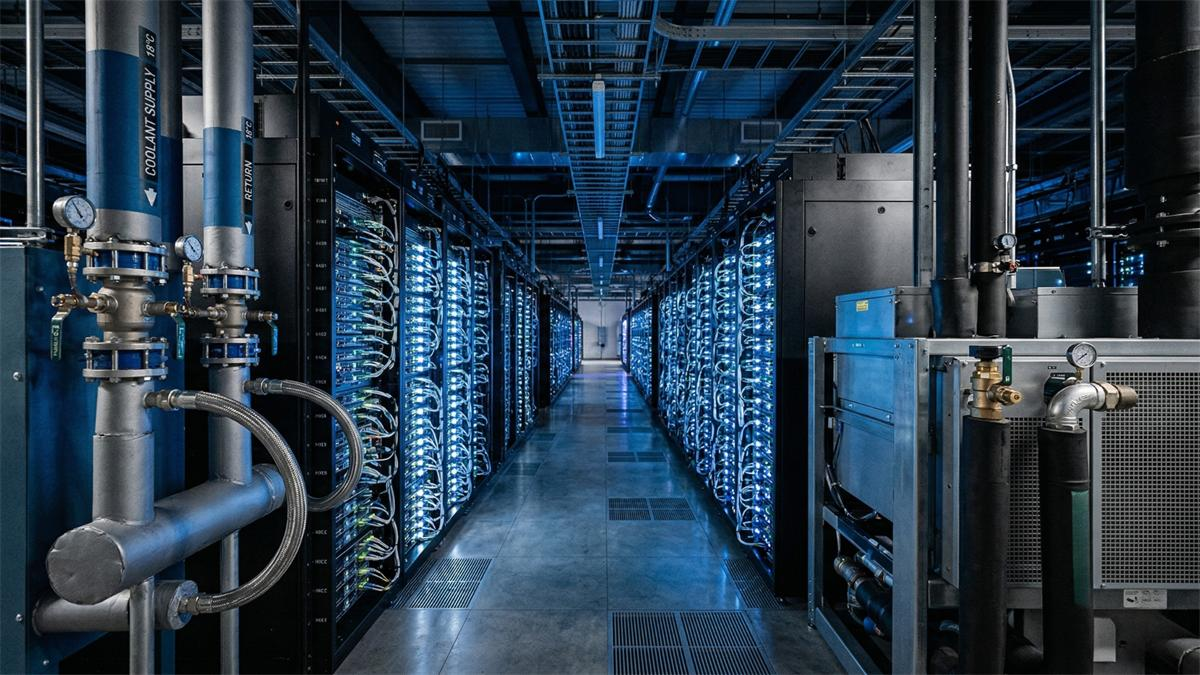
From Bitcoin Mining to AI Data Centers: Why Power and Cooling Infrastructure Matter
October 15, 2026 | PunkHash Industry Insights
The global computing industry is undergoing a significant transformation.
For years, Bitcoin mining has pushed the boundaries of high-density computing, electrical power distribution, cooling efficiency, and hardware reliability.
Today, artificial intelligence is creating similar infrastructure challenges — often at a much larger scale.
As AI computing demand expands, attention is shifting beyond GPUs and processors toward the physical infrastructure required to operate them efficiently.
Power distribution, liquid cooling, reliable electrical connections, and hardware manufacturing are becoming increasingly important parts of the computing ecosystem.
For companies with experience in ASIC mining hardware and infrastructure supply chains, this transition presents new opportunities.
1. Why Bitcoin Mining and AI Data Centers Share Infrastructure Challenges
Bitcoin mining and AI computing serve different purposes.
Bitcoin miners perform specialized cryptographic calculations using application-specific integrated circuits (ASICs), while AI servers use GPUs, CPUs, and specialized accelerators to train and run machine learning models.
Despite these differences, both industries depend on several critical infrastructure elements.
Reliable Power Supply
High-performance computing equipment requires stable electrical power.
In Bitcoin mining operations, electricity costs directly affect profitability. Operators must consider power consumption, electrical efficiency, equipment reliability, and infrastructure capacity.
AI data centers face additional requirements, including high-density rack power distribution, redundancy, power quality, and uptime.
Effective Thermal Management
Computing equipment generates significant heat.
Without effective cooling, hardware may experience reduced performance, increased component wear, or unexpected shutdowns.
Both industries therefore require carefully designed thermal management systems.
Hardware Reliability and Maintenance
Large computing facilities rely on continuous operation.
Equipment failures, electrical connection problems, cooling interruptions, and maintenance delays can create operational losses.
This makes component quality, equipment testing, and preventive maintenance essential.
The key connection between Bitcoin mining and AI computing is not that they use identical hardware. It is that both depend on reliable physical computing infrastructure.
2. The Rise of High-Density AI Computing Infrastructure
The Open Compute Project (OCP) Global Summit 2026 highlights the industry’s growing focus on scalable AI infrastructure.
Companies including NVIDIA and LITEON have presented developments related to open hardware architectures, advanced power distribution, and high-capacity cooling technologies.
These developments reflect three important trends.
Trend 1: Higher Power Density
AI computing systems are becoming increasingly power-intensive.
Traditional server power distribution designs may not be suitable for every new high-density deployment.
As a result, the industry is exploring advanced power architectures, including 800VDC systems.
Higher-voltage distribution can help reduce current requirements for a given power level, although system efficiency, safety, protection, and implementation depend on the complete electrical design.
Trend 2: Increasing Adoption of Liquid Cooling
Air cooling remains important in many computing environments.
However, liquid cooling is increasingly being adopted for applications involving high thermal density.
Depending on system architecture, liquid cooling may involve:
- Cold plates
- Coolant distribution units (CDUs)
- Pumps and heat exchangers
- Liquid cooling manifolds
- Pipes, hoses, and connectors
- Temperature and flow monitoring systems
These systems require careful engineering, testing, and ongoing maintenance.
Trend 3: More Standardized Hardware Architectures
Open hardware initiatives aim to improve interoperability, scalability, and collaboration across the computing supply chain.
Standardized designs can create opportunities for qualified manufacturers of mechanical components, cable assemblies, electronic modules, and supporting hardware.
However, open specifications do not eliminate the need for engineering validation, certification, or supplier qualification.
3. Why Power Distribution Is Becoming a Major Opportunity
Power distribution is one of the most important elements of any computing infrastructure project.
A typical high-density facility requires multiple layers of electrical equipment, from utility connections and transformers to power distribution systems and equipment-level connections.
At the equipment level, reliable power connections are essential.
Depending on the application, supporting components may include:
- Custom AC power cables
- Industrial power connectors
- Cable harness assemblies
- Power distribution accessories
- Electrical monitoring components
- Specialized wiring solutions
Custom Power Cable Manufacturing
Not every computing installation uses identical equipment layouts.
Cable length, connector configuration, conductor size, current rating, and installation conditions may vary.
Custom cable assemblies can help system integrators address specific equipment requirements.
For example, a customer may need a cable assembly with defined connector types, conductor specifications, branch lengths, and quantities.
A reliable manufacturing process should include:
- Confirmation of technical specifications
- Connector and cable material verification
- Prototype development when necessary
- Electrical and mechanical testing
- Production quality control
- Packaging and delivery verification
For buyers, the objective is not simply finding the lowest cable price. It is obtaining a suitable, reliable, and properly tested component for the intended application.
4. Liquid Cooling: Lessons From ASIC Mining Infrastructure
Liquid cooling is already familiar to many operators in the Bitcoin mining industry.
Hydro-cooled ASIC miners use liquid cooling systems to transfer heat away from high-performance computing components.
These installations may include pumps, cooling distribution equipment, piping, heat exchangers, and monitoring systems.
Some of the operational knowledge developed in hydro-cooled mining environments is relevant to broader computing infrastructure.
For example:
Cooling system reliability: Maintaining stable coolant flow and monitoring system conditions.
Maintenance planning: Identifying potential leaks, blockages, or component failures.
Infrastructure integration: Coordinating electrical equipment, cooling components, and facility layouts.
However, there are important technical differences between ASIC hydro-cooling and advanced AI server liquid cooling.
AI systems may require different cold plate designs, coolant specifications, pressure limits, redundancy requirements, and monitoring standards.
Components must therefore be validated for their intended applications.
The opportunity is not to assume that mining cooling hardware can directly replace AI cooling equipment.
Instead, it is to apply relevant manufacturing and infrastructure experience to the development of properly engineered solutions.
5. Opportunities for Hardware OEM and ODM Manufacturers
As computing infrastructure becomes more complex, equipment developers and system integrators may require specialized manufacturing partners.
This creates opportunities beyond the production of complete servers.
Potential manufacturing categories include:
Custom Cable Assemblies
Application-specific cable lengths, connector configurations, and electrical specifications.
PCB and PCBA Manufacturing
Printed circuit boards and assembled electronic modules for compatible hardware applications.
Mechanical Components
Custom enclosures, mounting brackets, metal components, and structural accessories.
Prototype and Small-Batch Manufacturing
Engineering samples, prototype assembly, design validation, and controlled pilot production.
Supporting Hardware Accessories
Application-specific accessories designed according to customer drawings, specifications, and quality requirements.
For emerging AI hardware brands, reliable manufacturing partners can help bridge the gap between product development and commercial production.
Supplier selection should consider engineering capability, quality management, testing procedures, production capacity, and delivery reliability.
6. How PunkHash Is Approaching This Industry Transition
At PunkHash, our background is rooted in ASIC mining hardware, equipment sourcing, and mining-related supply chain services.
Our experience includes working with customers on mining equipment procurement, hardware specifications, equipment testing, and supporting infrastructure requirements.
As the broader computing industry evolves, we are exploring how relevant supply chain capabilities can support additional hardware applications.
Our areas of interest include:
ASIC 채굴 하드웨어
Sourcing and supplying mining equipment for different operational requirements.
Mining Infrastructure Components
Supporting hardware procurement and customized components for mining-related installations.
Custom Hardware Manufacturing
Exploring OEM/ODM opportunities through our PunkForge manufacturing business, including cable assemblies, electronic hardware, and custom product development.
AI Computing Hardware Supply Chains
Engaging with hardware developers and system integrators to understand manufacturing requirements for emerging computing applications.
We believe the next stage of industry growth will create opportunities for companies that combine hardware knowledge, manufacturing coordination, and practical supply chain experience.
7. What Should Mining Operators and AI Infrastructure Buyers Consider?
Before investing in new computing equipment or infrastructure, buyers should evaluate several important factors.
| Evaluation Area | Key Questions |
|---|---|
| Power capacity | Is sufficient electrical capacity available? |
| Electricity cost | What is the actual delivered electricity price? |
| Cooling | Which cooling architecture suits the equipment? |
| Compatibility | Are components designed for the intended system? |
| Reliability | What testing and quality assurance are required? |
| Maintenance | How will equipment be serviced and repaired? |
| Supply chain | Can the supplier meet technical and delivery requirements? |
| Total cost | What is the full cost of ownership? |
These considerations apply differently to ASIC mining facilities, AI data centers, and custom hardware projects.
A successful project requires evaluating the entire system rather than focusing only on the price of individual components.
8. The Future: Computing Infrastructure Beyond Bitcoin Mining
The relationship between Bitcoin mining and AI computing should not be viewed as a simple replacement of one industry by another.
Both industries will continue to have different hardware requirements, operating models, and economic drivers.
However, their shared dependence on power, cooling, electrical connectivity, and reliable manufacturing creates opportunities for knowledge transfer and supply chain development.
As computing infrastructure expands, demand may increase for specialized components and qualified manufacturing partners.
For hardware suppliers, understanding these changes is essential.
The next generation of computing infrastructure will not be defined by chips alone. It will also depend on how efficiently, reliably, and safely those chips are powered, cooled, and connected.
Looking for ASIC Mining Hardware or Custom Hardware Manufacturing Support?
PunkHash works with customers across the mining hardware supply chain and explores custom hardware manufacturing opportunities through PunkForge.
If your business is sourcing ASIC mining equipment, developing customized hardware, or evaluating compatible power and infrastructure components, we welcome your inquiry.
Contact PunkHash
Website: https://www.punkhash.com
Please share your product specifications, estimated quantities, destination, and project requirements so our team can review the opportunity.
Disclaimer: This article is for general industry information. Product specifications, electrical systems, and cooling solutions must be independently verified for each application. References to emerging technologies do not imply that PunkHash manufactures or certifies every component discussed.
Frequently Asked Questions
What is the difference between Bitcoin mining infrastructure and AI data center infrastructure?
Bitcoin mining infrastructure is designed to operate specialized ASIC mining equipment, while AI data centers support GPU, CPU, and accelerator-based workloads. Both require reliable electricity, cooling, and network connectivity, but their hardware, redundancy, operating requirements, and system designs can differ significantly.
Can Bitcoin mining cooling systems be used for AI servers?
Some engineering principles and supporting components may be relevant, but mining cooling systems cannot automatically be used with AI servers. Compatibility depends on cooling design, operating pressure, coolant requirements, thermal load, and system specifications.
Why are AI data centers exploring 800VDC power distribution?
Higher-voltage DC distribution can reduce current for a given power level, potentially improving aspects of power delivery in high-density installations. However, 800VDC systems require specialized protection, engineering, and safety validation.
What custom hardware components are used in computing infrastructure?
Depending on the application, components may include custom power cables, connectors, cable harnesses, PCBs, mechanical enclosures, mounting brackets, cooling accessories, and monitoring modules.
Does PunkHash provide custom hardware manufacturing services?
PunkHash operates in the ASIC mining hardware supply chain and explores OEM/ODM hardware manufacturing projects through PunkForge. Customers can submit technical drawings, product requirements, and estimated order quantities for feasibility review.