As the mining industry grows more competitive, many miners—especially beginners and small-scale operators—are turning to used ASIC miners to lower their entry cost. A good second-hand miner can still deliver strong ROI, but only if you know how to evaluate it correctly.
Here is a practical guide to help you choose the right used miner for your setup.
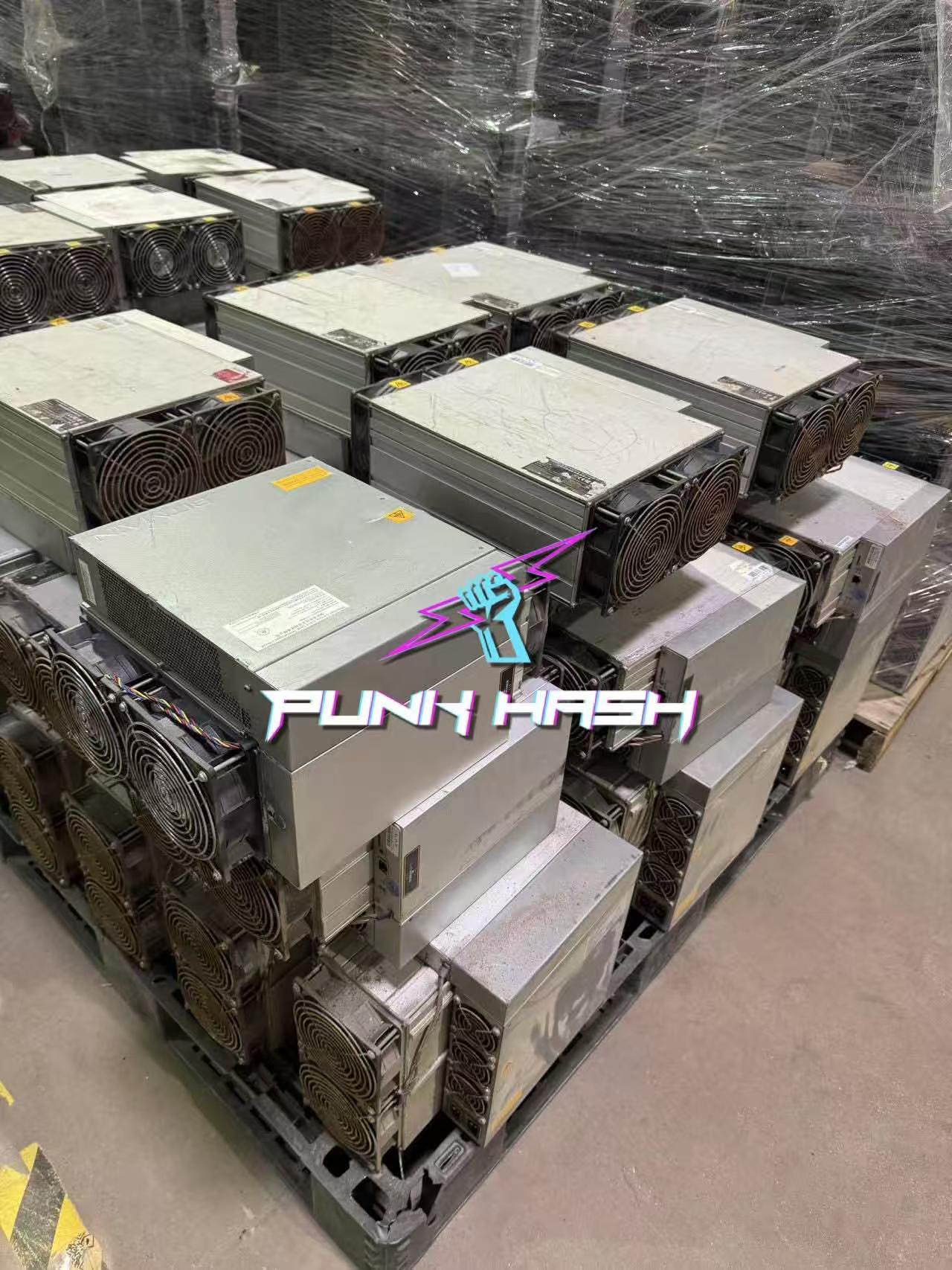
(PunkHash Miner Factory)
1. Define Your Mining Goals and Coin Type
Before choosing any machine, clarify what you want to mine:
BTC Mining (SHA-256)
• Suitable ASICs include:
• Antminer S19 / S19 Pro
• Whatsminer M30S / M30S++ / M31S / M50 series
• Avalon A1366 / A1466
These models vary in hash rate (from 80T–150T+) and efficiency (≈21–29 J/TH).
Scrypt Mining (LTC/DOGE)
Popular machines include:
• Antminer L7
• Goldshell LT series
Equihash, Blake2B or other algorithms
Depending on the coin, the availability of used miners may vary. Knowing your target algorithm helps narrow down your search quickly.
2. Check the Machine’s Hashrate & Power Efficiency
When evaluating used machines, focus on real-world performance, not just factory specs.
Key indicators:
• Rated Hashrate (e.g., S19 Pro ≈ 110T ±3%)
• Power Consumption (e.g., 3250W ±10%)
• Energy Efficiency (e.g., 29.5 J/TH for many S19 models)
Used machines may operate slightly below original performance. A healthy machine should still run within ±5–10% of its rated output.
3. Inspect the Machine’s Physical Condition
For second-hand units, hardware condition matters more than the model itself.
What to check:
• Hashboards: No burnt marks, no repaired chips, stable detection
• Fans: Spin smoothly with no abnormal noise
• Power supply (PSU): No rust, stable voltage
• Heat sinks: None should be loose or missing
• Exterior: Dust level can indicate storage conditions
Machines used in clean, cool hosting sites usually have a longer lifespan.
4. Ask About Usage History
Sellers of used miners often cannot provide exact usage months, but you can still ask:
• Was the miner used in a large farm or home environment?
• Was it operated in high temperature or high humidity areas?
• Has it undergone repairs? If yes, were original components used?
• Does it come retested with valid logs?
A miner with stable logs and no repaired hashboards is usually a safer choice.
5. Verify Test Reports Before Buying
A reliable seller should provide:
• 24-hour test video or test log
• Temperature curve
• Hashrate stability screenshot
• Error board information
If the machine has frequent “x” boards, missing chips, or unstable hashrate, it’s best to avoid it.
6. Consider Noise, Power Cost & Space
Used miners are still industrial equipment.
Ask yourself:
• Can your environment handle 70–80 dB of noise?
• Is your electricity rate low enough (usually <$0.10/kWh recommended)?
• Do you have enough space and airflow to run multiple units safely?
For home miners, consider quieter models or low-power units.
7. Compare Price vs. Potential ROI
Used miners are cheaper, but ROI depends on:
• Market coin price
• Network difficulty
• Power cost
• Machine efficiency
Always calculate ROI using conservative estimates.
8. Recommended Machines for Used Buyers
Here are stable, high-demand models often chosen for the used market:
For BTC (SHA-256):
• Whatsminer M30S / M30S+
• Antminer S19 Pro
• Avalon A1466
For Scrypt (LTC/DOGE):
• Antminer L7
These models tend to hold value well and have abundant spare parts.
Buy Smart, Buy Tested
Choosing a used miner is about balancing cost, efficiency, and machine condition.
Always work with a seller who provides transparent testing, real logs, and after-sales support.
If you want help choosing the most suitable used miner for your budget and power conditions, feel free to contact us:
PunkHash
🌐 Website: www.punkhash.com
We can provide updated stock lists, machine test reports, and the best prices for worldwide shipping.
 Langgani saluran PunkHash

















 Block A Level 8, Sky Park One City, Jalan USJ 25/1B, 47650 Subang Jaya, Selangor,Malaysia
 +(60)116 999 5678

 arvin.cn.work@gmail.com