
Bitcoin Mining Difficulty Drops 9.13%: What It Means for ASIC Miner Buyers

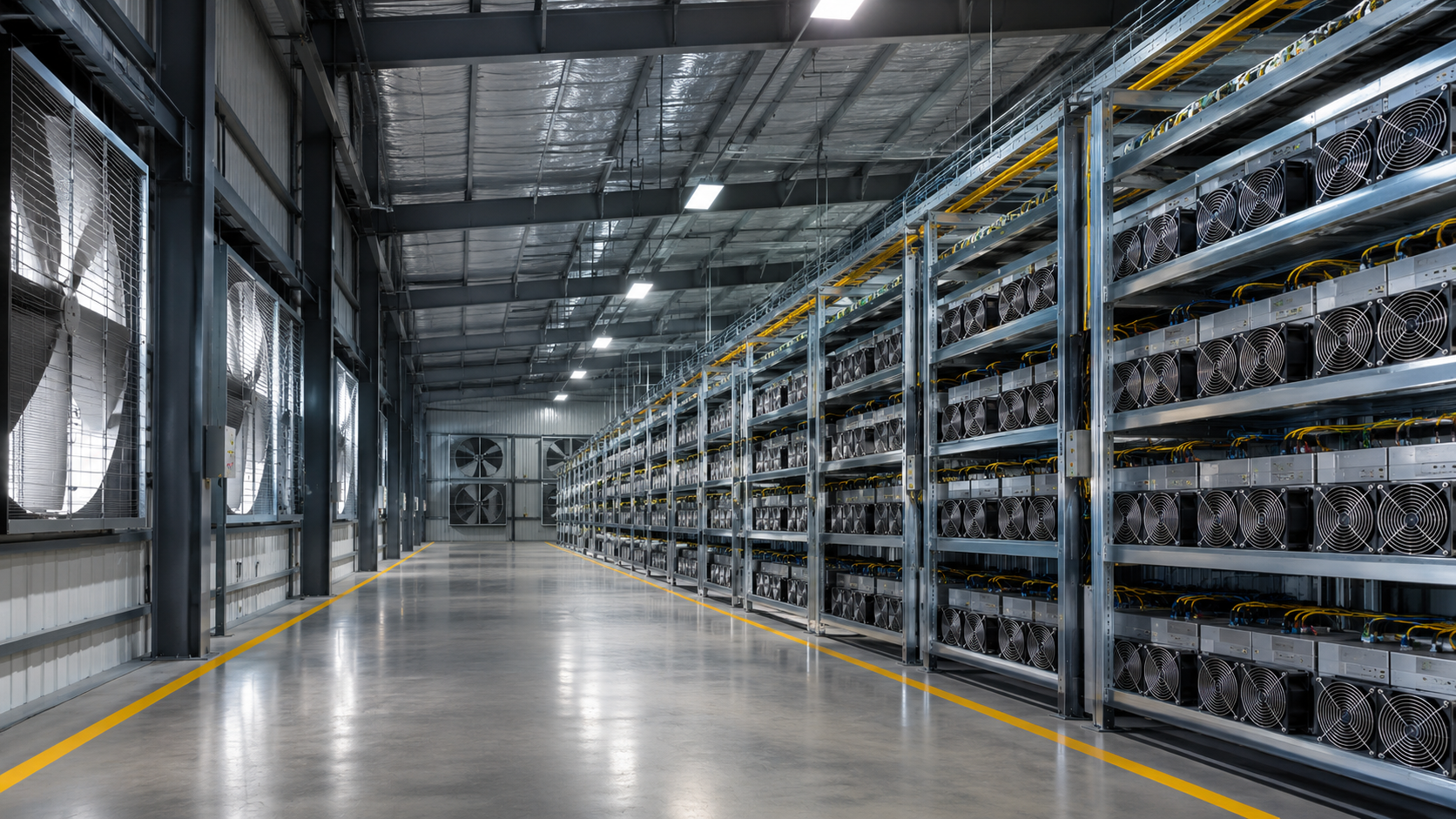
Bitcoin Mining Difficulty Drops 9.13%: What It Means for ASIC Miner Buyers
November 16, 2026 | PunkHash Mining Industry Insights
Bitcoin Mining Difficulty Has Dropped — But the Economics Are More Complicated
On November 14, 2026, Bitcoin mining difficulty fell by approximately 9.13%, declining from around 148.37 trillion to 134.82 trillion.
The adjustment was recorded at block 975,744.
For Bitcoin miners, a significant downward difficulty adjustment can improve the expected BTC production per unit of hashrate, assuming other network conditions remain constant.
However, the impact on actual mining profitability is more complicated.
Mining operators must still consider electricity costs, hardware efficiency, Bitcoin price, transaction fees, mining pool charges, and operating expenses.
For ASIC equipment buyers, this creates an important question:
Should mining operators invest in newer, more efficient ASIC miners, purchase lower-cost used machines, or postpone equipment upgrades?
The answer depends on each mining operation’s economics.
1. What Does a 9.13% Difficulty Reduction Mean?
Bitcoin automatically adjusts mining difficulty approximately every 2,016 blocks to maintain an average block interval close to ten minutes.
When blocks are produced more slowly than expected, the network reduces difficulty.
The November 14 adjustment lowered difficulty to approximately 134.82T.
At the same network hashrate, a lower difficulty level increases the expected number of blocks found per unit of computing power over a given period.
But this does not guarantee higher revenue in US dollars.
The Bitcoin price, transaction fees, and network hashrate may also change.
The important distinction is between improved mining conditions and actual business profitability.
2. Why Hashprice Matters More Than Difficulty Alone
Hashprice measures the expected daily mining revenue generated by a unit of computing power, commonly expressed in USD per PH/s per day.
It provides a useful way to compare mining revenue against electricity costs.
For example, a machine producing 200 TH/s represents 0.2 PH/s of hashrate.
If hashprice is $30 per PH/s per day, the estimated daily gross mining revenue would be:
0.2 × $30 = $6.00 per day.
This is only an illustrative calculation.
Actual revenue changes with market conditions, mining pool performance, fees, and machine uptime.
More importantly, gross mining revenue is not profit.
3. Electricity Cost Can Change the Entire Investment Decision
Consider an ASIC miner operating at 3,500 watts.
Its daily electricity consumption is:
3.5 kW × 24 hours = 84 kWh.
The daily electricity cost would be:
| Electricity Price | Daily Electricity Cost |
|---|---|
| $0.03/kWh | $2.52 |
| $0.05/kWh | $4.20 |
| $0.08/kWh | $6.72 |
| $0.10/kWh | $8.40 |
These calculations assume continuous operation at 3,500 watts and exclude cooling overhead, power losses, maintenance, hosting, and other costs.
A mining operation with inexpensive electricity may be able to operate hardware that is uneconomical in a higher-cost location.
This is why the same ASIC miner can be attractive to one buyer and unsuitable for another.
4. Used ASIC Miners vs Newer High-Efficiency Models
A lower difficulty environment can encourage operators to reconsider existing hardware.
However, selecting a mining machine requires balancing acquisition cost and operating efficiency.
Older ASIC Mining Equipment
Older models, including selected Antminer S19 and Whatsminer M50 configurations, may offer lower upfront acquisition costs.
Potential advantages include:
- Lower initial equipment investment
- Availability through secondary equipment markets
- Familiar maintenance procedures
- Opportunities for buyers with low electricity costs
Potential limitations include:
- Higher electricity consumption per TH
- Greater exposure to maintenance and component wear
- Reduced profitability when hashprice declines
- Different remaining service life and warranty conditions
Newer High-Efficiency ASIC Miners
Newer equipment, including selected S21-series models, may provide better energy efficiency.
Potential advantages include:
- Lower energy consumption per unit of hashrate
- Better suitability for electricity-constrained sites
- Potentially stronger operating margins under comparable conditions
Potential limitations include:
- Higher initial capital requirements
- Longer capital recovery periods in some market conditions
- Additional infrastructure or cooling requirements for certain models
Neither option is automatically better.
The appropriate choice depends on equipment price, electricity cost, actual efficiency, reliability, and the buyer’s investment horizon.
5. How Mining Operators Should Evaluate ASIC Equipment
Before purchasing mining equipment, buyers should compare at least six factors.
1. Acquisition Cost
Evaluate the total delivered cost rather than only the advertised machine price.
Include shipping, import charges, installation, and any necessary infrastructure modifications.
2. Energy Efficiency
Compare actual energy consumption in J/TH.
Use verified specifications and operating test results whenever possible.
3. Electricity Pricing
Calculate profitability using the site’s actual electricity contract.
Consider demand charges, power distribution losses, and any additional facility costs.
4. Machine Condition
For used ASIC miners, request appropriate inspection and testing documentation.
Relevant checks may include:
- Serial number verification
- Hashrate test results
- Power consumption
- Hashboard condition
- Fan and power supply condition
- Repair history, when available
- Warranty and DOA terms
5. Operational Reliability
A machine generating revenue only part of the time may perform worse financially than its nominal specifications suggest.
Downtime, thermal issues, unstable power, and maintenance can affect the actual return.
6. Market Risk
Mining difficulty and hashprice are not fixed.
A purchase decision should include downside scenarios rather than relying on a single day’s mining revenue.
6. Why Mining Infrastructure Still Matters
Hardware selection is only one part of a successful mining operation.
Mining farms must also manage:
- Electrical distribution
- Ventilation and airflow
- Heat removal
- Dust and environmental conditions
- Equipment monitoring
- Maintenance access
- Operational safety
For larger installations, air cooling, hydro cooling, and immersion cooling may each be appropriate in different circumstances.
The correct cooling architecture depends on the miner models, facility design, climate, operating requirements, and budget.
Cooling systems should be engineered and validated for the specific equipment and site.
7. What Does This Mean for the Used ASIC Market?
A significant difficulty reduction does not necessarily signal an immediate recovery in equipment demand.
Instead, it may encourage different responses from mining operators.
Some operators may continue running their existing fleets.
Others may replace inefficient machines.
Some may purchase used equipment to reduce capital expenditure.
And companies shifting toward AI or high-performance computing may consider selling mining equipment or repurposing selected infrastructure assets.
For hardware suppliers, this creates opportunities in:
- Used ASIC equipment sourcing
- Bulk equipment procurement
- Hardware testing and refurbishment
- Replacement parts
- Cooling infrastructure
- Mining facility upgrades
- Equipment relocation and asset disposition
However, actual equipment availability and pricing must be confirmed for each transaction.
8. How PunkHash Supports ASIC Hardware Buyers
PunkHash focuses on ASIC mining hardware, equipment sourcing, mining components, and cooling infrastructure solutions.
Our experience includes working with different mining equipment categories, used hardware supply channels, and customized infrastructure requirements.
We believe equipment recommendations should be based on the customer’s real operating conditions.
For mining operators evaluating their next hardware purchase, useful information includes:
- Mining location
- Electricity cost per kWh
- Available power capacity
- Preferred ASIC models
- Estimated equipment quantity
- Cooling requirements
- Budget and deployment schedule
With this information, hardware options can be evaluated more realistically.
Frequently Asked Questions
Does lower Bitcoin mining difficulty mean higher mining profits?
Not necessarily. Lower difficulty can improve expected BTC production per unit of hashrate, but USD revenue and profit also depend on Bitcoin price, transaction fees, electricity costs, pool fees, and operating expenses.
Are used ASIC miners still worth buying in 2026?
They may be suitable for certain operations, particularly when acquisition costs and electricity prices are favorable. Buyers should evaluate efficiency, condition, maintenance risk, and projected operating margins.
Is an Antminer S21 always better than an S19?
Not in every investment scenario. A newer S21 model may offer higher efficiency, while a lower-priced used S19 may require less initial capital. The comparison depends on the exact models, equipment prices, electricity costs, and operating assumptions.
What is the most important number when buying ASIC miners?
No single metric is sufficient. Hashprice, J/TH, electricity cost, machine price, and reliability should be considered together.
How often does Bitcoin mining difficulty change?
Bitcoin adjusts mining difficulty every 2,016 blocks, approximately every two weeks.
Conclusion: Mining Profitability Depends on More Than Network Difficulty
The November 2026 difficulty adjustment is an important development for Bitcoin miners.
But it does not eliminate the need for careful equipment selection and operating cost management.
In today’s mining environment, successful hardware purchasing decisions require a clear understanding of:
Acquisition Cost + Energy Efficiency + Electricity Cost + Operational Reliability + Market Risk
For mining operators, the goal should not simply be to buy the cheapest machine or the newest model.
It should be to select equipment that fits the site’s actual economic and operational requirements.
Looking for ASIC Mining Hardware or Infrastructure Solutions?
PunkHash welcomes discussions with mining operators, equipment distributors, and infrastructure partners.
Share your target machine models, electricity cost, quantity, and delivery location to discuss suitable sourcing options.
Website: https://www.punkhash.com/
PunkHash — Compute the Future Together.